All Souling Chapel, Cape Town, South Africa

All Souling Chapel, Cape Town, South Africa

The All Souls Chapel (All Souls Chapel) in Cape Town, South Africa is a small religious building with a central theme of "remembrance of the dead", usually associated with the Catholic or Anglican All Souls' Day (November 2 of each year) tradition. Although there are many chapels named after "all spirits" in Cape Town, the most commonly mentioned are small churches located in the urban area or surrounding historical districts that carry the faith memory of local communities.
The Catholic Church of Canada

The Catholic Church of Canada

The Catholic Church in New Brunswick, Canada has a long history and rich religious culture. The Cathedral of Our Lady of Santa Maria, located in St. John's, is one of the oldest churches in New Brunswick, founded in 1855 and consecrated on July 16, 1885. It is not only a Latin rite church of the Roman Catholic Church, but also listed as one of Canada's historic churches and on the pilgrimage list for the Year of Mercy. The architectural style blends Roman and Gothic elements. On February 20, 2001, the church was named a provincial-level historical site.
St. Albans Cathedral in England

St. Albans Cathedral in England

The official name is St. Alban Cathedral and Abbey Church, but locals commonly refer to it as a "monastery". It is an English church cathedral located in St. Alban, England. Built in the 8th century, the existing buildings are Norman or Romanesque from the 11th century, and also include Gothic and 19th century additions. Most of the buildings in the church can be traced back to the Norman period. After its dissolution in the 16th century, it ceased to be a monastery and became a cathedral in 1877. The church is 85 meters long and is the longest nave among all cathedrals in England.
Kirk Madeline Church in Scotland

Kirk Madeline Church in Scotland

Located in the Rhins region of Scotland. This location was once the site of an early church, and three early Christian stone tablets dating back to the 6th century have been discovered here. These stones include Latin inscriptions and Greek Christian crosses, commemorating clergy and standing in the cemetery around the church until the 1840s. These stones confirm the early existence of a Christian church, which was very important in history. The Christian worship in this location can even be traced back to the 400s before the construction of the church, when there was a monastery here. The existing church was built in the late 19th century.
Czech Saint Catherine's Dome Church

Czech Saint Catherine's Dome Church

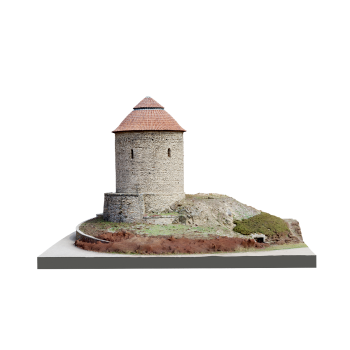
It is an early medieval dome building located in Znojmo, Czech Republic. This dome shaped church consists of an elliptical nave and a semi-circular apse facing east. Its masonry is not made of traditional Romanesque stones, but carefully stacked with irregular dark quarry stones. The first mention of this building dates back to 1100, when Bohemian Duke Bo ř ivoy II held his wedding here. The function of the dome shaped church is not fully understood, but it is speculated that it may serve as a religious place of worship for the castle owner and his followers, as well as the surrounding area. The building was rebuilt in 1888.
Durham Cathedral, England

Durham Cathedral, England

The Durham Cathedral, officially named Christ, Mary and St. Cuthbert, is a cathedral of the Church of England located in Durham, England. It is the seat of the Bishop of Durham and also the mother church of the Durham Diocese. The cathedral houses the holy niches of the Anglo Saxon saints Cuthbert and Bede. There are daily worship activities of the Church of England here, and in 2019, 727367 visitors were received. Durham Cathedral is a Grade I protected building and is part of the Durham Castle and Cathedral World Heritage Site.
St. Peter and Paul's Church

St. Peter and Paul's Church

It is a church with a long history, built around 1120 and adopting the Romanesque style. Not only religious buildings, but also the first part of the three defense works. In 1320, the church underwent an early Gothic expansion. In the 15th century, in order to strengthen defense, a defensive wall was built around the cemetery surrounding the church. In 1987, murals dating back to around 1320 were discovered and restored, depicting Saint Christopher. This church witnesses the evolution of architectural styles and historical changes in medieval Europe, and is an important heritage for studying medieval architecture and art.
St. Jacob's Church in Austria

St. Jacob's Church in Austria

It is a Roman Catholic church located in the southern part of the village of Regensburg in the municipality of Staldof, Austria. This church is named after Saint James and is a Baroque style building that was converted from a granary in the late 17th century. The tower is one of its prominent features, decorated with an onion shaped dome at the top, adding an oriental touch to the church and making it stand out among the surrounding buildings. In 1770, the church established a diocese, and in 1783, it officially became an independent diocese, marking a further recognition and elevation of the importance of the church in religious and social life.
Maria Magdalena Chapel

Maria Magdalena Chapel

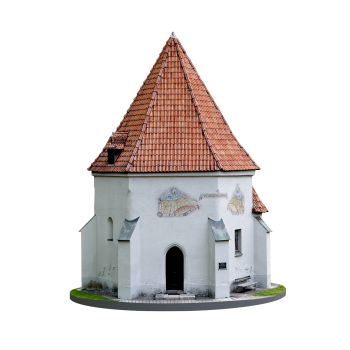
It is a hexagonal central building built in the first half of the 13th century. It has a tent style roof and a circular rear hall. This building was once used as a bone storage hall and is now used as a funeral home. Known for its unique hexagonal design and tent roof, these features make it particularly distinctive in medieval architecture. The circular rear hall adds beauty to the building and makes it more harmonious structurally. As a place for storing remains, it has witnessed the end of many lives and commemorations. Now transformed into a funeral home, continuing to provide a space for people to mourn and bid farewell.
St. Michael's Fortified Church Gothic Crematorium

St. Michael's Fortified Church Gothic Crematorium

Located within the reinforced church of St. Michael's, the attached crematorium is a place for storing the remains of the deceased, in order to address the limited space of St. Michael's cemetery. This crematorium was built after 1395. It is a tall and narrow building with five spires on the east side, sturdy stepped buttresses, double layered pointed arch windows adorned with clover flowers, and pointed arch windows adorned with clover flowers. The crematorium is located between the rear hall of the reinforced church and the reinforced tower in the southeast corner. The interior is a single span structure with a ribbed dome at the top, supported on a Holy Grail shaped pedestal.
Poland's historic wooden church

Poland's historic wooden church

Located in the Carpathian region of Poland, there is a historic wooden church. Built in 1759, it was originally a courtyard chapel of the Kuchkovsky family, named after the Gospel of St. John. In 1778, it became a branch church, and from 1788 onwards, it became the parish church of the newly established Diocese of Saint Anne. Until 2004, this building was used as a parish church until a new church was built and put into use. On April 7, 2004, it was included in the memorial registry.
Densu ş Stone Church in Hunedoara, Romania

Densu ş Stone Church in Hunedoara, Romania

The Densu ş Stone Church, located in Densu ş Village, Hunedoara County, Romania, is a historic religious building and is considered one of the oldest stone churches in Romania. The history of the church can be traced back to the 14th century, and some historians even believe that it may be even older. The walls of the church are constructed from limestone blocks taken from nearby ancient Roman cities. Not only is it a religious building, but it is also a symbol of Romanian culture and history. Witnessed the rich history from the Dacian era until today. Due to its unique historical value and architectural features, it has attracted numerous domestic and foreign tourists to visit and pilgrimage.
San Carapet Church in Amini

San Carapet Church in Amini

A medieval monastery complex located in Armenia, also known as Camille Monastery or Zolakiu Monastery, has significant architectural and historical value. The St. Karapette Church is a highlight of the architectural complex, built in 1205 and belonging to the vaulted church type. On the east side of the church, there is a semi-circular main altar, and on both sides are arched vestibules with a right angle perspective. The church has two entrances, located on the west and north sides respectively. All facades are decorated with 'Armenian Hymn'. The dome of the church was destroyed in the 1939 earthquake and was repaired in 1980.
St. George's Martyrs' Church, Italy

St. George's Martyrs' Church, Italy

Located in the Molise region of Italy, it is a historic religious building dating back to the 12th century. Known for its Romanesque style, it was declared a "National Monument" in 1901. The main entrance and both sides have important decorative sculptures, and the interior is divided into three central halls enclosed by their respective rear halls, separated by two rows of asymmetrical columns. The column heads are decorated with patterns similar to the exterior, and the church also features a beautifully decorated hemispherical baptismal pool made of single stones, multiple altars, and an underground tomb dedicated to St. George. It is the local religious center and an important place for tourists to learn about the local history and culture.
Holy Savior Church

Holy Savior Church

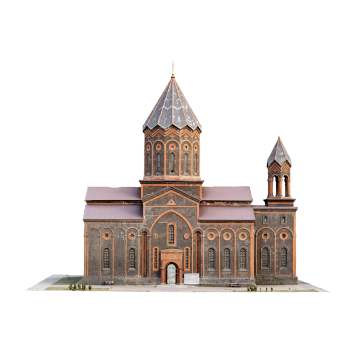
It is a religious building with a long history, founded in 1858 and completed in 1872. It was dedicated the following year. Its design inspiration comes from the Ani Cathedral, but on a larger scale. The church survived the 1926 earthquake due to its sturdy structure. A devastating earthquake in 1988 caused severe damage to the Church of the Holy Savior, but since 2002, the church has undergone a comprehensive renovation process. It is not only a symbol of faith, but also a witness to historical changes, reflecting the impact of social and political turmoil on cultural heritage. Now it is once again shining with its glory as a religious and cultural landmark.
San Pantaleon de Loza Chapel in Burgos, Spain

San Pantaleon de Loza Chapel in Burgos, Spain

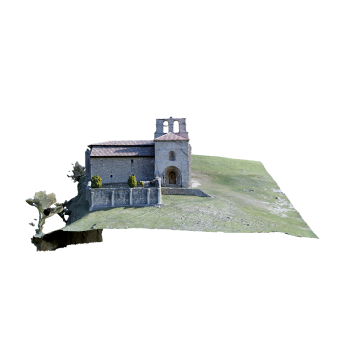
A Romanesque chapel located in the province of Burgos, Spain, built in the 13th century. Renowned for its unique geographical location and architectural features, it sits on a rock known as the 'Red Peak', resembling the bow of a ship, overlooking the Jerea River Valley. Announced as a national monument, its artistic value, sculptural decoration, and symbolic significance are highly praised. Not only is it a religious pilgrimage site, but it is also a must visit destination for art and architecture enthusiasts. Its architecture blends elements of Romanesque and Gothic styles. In addition, the small church is associated with the legend of the Holy Grail, adding a touch of mystery.
Monte Corte Castle and Santa Anna Chapel in Catalonia, Spain
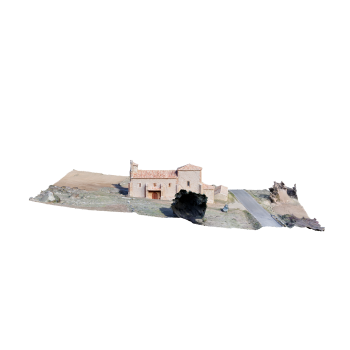
Monte Corte Castle and Santa Anna Chapel in Catalonia, Spain

The small town of Montorn è s de Segarra located in Catalonia, Spain. The castle was first recorded in the 11th century by knight Guillem Isarn de Trevics in his will. At the end of the 15th century, the original castle was rebuilt, forming the spectacular rectangular fortress we see today, with two twin towers, a large semi-circular Romanesque facade, Renaissance style windows, and an arcade. Not far in front of the castle is the St. Anne's Chapel, built in the 16th century, which together with the castle forms an important historical site in the area.
Church of Santa Clara in Soria, Spain
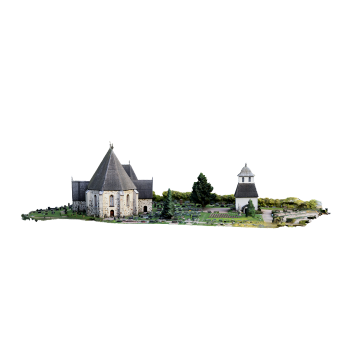
Church of Santa Clara in Soria, Spain

A church located in Carrasena, Soria Province, Castile and Le ó n Autonomous Community, Spain. This church is located near the villages of Atalaya and Karascozad Abaho. Renowned for its unique geographical location and architectural style, it is one of the important religious and cultural landmarks in the region. The church is classified as a Roman Catholic place of worship and has a Romanesque architectural style.
Nousiainen Stone Church in Finland

Nousiainen Stone Church in Finland

Located in the Nousiainen region on the southwest coast of Finland, it is an ancient church with significant historical and cultural value. Originally recorded in 1232, it was a smaller church, possibly built of wood, dedicated to the Virgin Mary. Archaeologists have discovered that there are cemetery remains dating back to the early 11th century in the church area. The legendary first bishop of Finland, St. Henry, was initially buried in the Nousiainen Church and later moved to Turku Cathedral in the late 14th century. The existing stone church was built between 1420 and 1430 and is also dedicated to Saint Henry. Later named as a national architectural heritage.
Wooden Church in Salej County, Romania

Wooden Church in Salej County, Romania

Located in Salige County, Romania. This church is one of the outstanding representatives of traditional wooden architecture in Romania, reflecting the rich cultural heritage and wooden craftsmanship of the local area. It is very common in Romania, especially in the Maramures region, not only as a place of religious belief, but also as an important part of the local community's cultural and spiritual life. Using traditional construction techniques, instead of nails, wood is tightly bonded together through exquisite woodworking skills. Not only is it a landmark building in the region, but it is also an important tourist destination that attracts visitors and has significant value for studying Romania's history, religion, and ethnic art
New Zealand Christchurch Romanesque Cathedral

New Zealand Christchurch Romanesque Cathedral

Located in Christchurch, New Zealand, commonly known as the Christchurch Romanesque Cathedral or simply Basilica, it is a religious building of significant historical and cultural value. Designed by Francis William Petteri and built between 1901 and 1905, its architectural style was influenced by early Roman church architecture. It was once regarded as one of the outstanding representatives of church architecture in the Australasian region. Unfortunately, the 2011 Christchurch earthquake severely damaged this cathedral, leading to its demolition in 2020. During its existence, it was an important cultural symbol of Christchurch and even New Zealand.
Kvetera Church in Kakheti, Georgia

Kvetera Church in Kakheti, Georgia

A historic religious building located in Kakheti Oblast, Georgia, which is part of the Kvetera fortress. Built in the 10th century, it is renowned for its unique four arch design and exquisite architectural craftsmanship. Constructed using locally unique volcanic tuff, the exterior is decorated with blue tiles, while the interior features a dome and arched structure. Not only is it a model of early medieval religious architecture in Georgia, but it is also an important milestone in the country's architectural history. Despite experiencing thousands of years of storms, it still maintains its solemnity and elegance, and is a valuable heritage for exploring Georgia's history and culture.
VeraCruz Church in Segovia, Spain

VeraCruz Church in Segovia, Spain

A historic religious building located in Segovia, Spain, dating back to the 13th century. Renowned for its unique twelve sided design and Romanesque style, it is considered one of the best preserved churches of its kind in Europe. It is believed to have been built by the Knights Templar, but there has been controversy over the true identity of its builders, with some historians suggesting that it may have been built by the Knights of the Holy Sepulchre in Jerusalem. The design inspiration comes from the Holy Sepulchre Church in Jerusalem, whose architectural style and symbolic significance are deeply rooted in religious traditions and history. It is an important historical site in Segovia.
Romanesque period peace church

Romanesque period peace church

It is a religious building with a long history, and its exact construction date is unknown, but it is known to have existed during the Romanesque period. It consists of a narrow nave and a rectangular choir. In the second half of the 14th century, the church underwent expansion, adding a west tower and two side aisles. In the early 15th century, a Gothic choir was added. Unfortunately, the Hussite attack in 1427 resulted in severe damage to the nave, which was later demolished and rebuilt in the second half of the 15th century. Despite experiencing vicissitudes, it remains an important relic for studying medieval religious architecture and regional history. People can learn about the history and cultural value of this church.
1 2 3 4 Next